India emphasises Inclusive and Ecosystem Based Governance of Small Scale Fisheries
Published: Apr 28, 2026
By TIOLCorplaws News Service
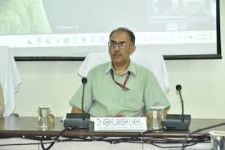
NEW DELHI, APR 28, 2026: DR. Abhilaksh Likhi, Secretary, Department of Fisheries, Ministry of Fisheries, Animal Husbandry and Dairying (MoFAH&D), Government of India, leads a high-level delegation, participating in the 5 th world Small-Scale Fisheries Congress, Hua Hin, Thailand on 27th - 30th April 2026 being organized by Food and Agriculture Organization (FAO) and TBTI Global. The 5th World Small-Scale Fisheries Congress is centred around the theme "Small-scale fisheries for advancing just harmony, young futures, and regenerative wisdom" focusing on promoting justice and conflict resolution in coastal and ocean region, empowering youth in fisheries and ocean stewardship, and promoting regenerative, climate-friendly practices rooted in traditional knowledge. The event witnessed participation from about 50 countries with 300 Delegates and will feature 45 technical sessions.
On 27 th April 2026, during his address in the 5th world Small-Scale Fisheries Congress, Dr. Abhilaksh Likhi, Secretary, Department of Fisheries, (MoFAH&D), highlighted the critical role of small-scale fisheries and aquaculture in supporting socio-economic development, food and nutritional security, and environmental sustainability. He underscored India's position as the world's second-largest fish producer, with record production of 19.7 million tonnes, and noted the strong growth in seafood exports driven by modernisation, innovation and sustained investments. He further emphasised India's commitment to sustainable and traceable fisheries, digital transformation and community-based approaches, while also highlighting strengthened regional cooperation through the Bay of Bengal Programme Inter-Governmental Organisation (BOBP-IGO), where India currently holds the Chair.
The Secretary, Department of Fisheries (MoFAH&D), also participated as a panellist in an FAO-moderated session on the National Plan of Action for Small-Scale Fisheries (NPOA-SSF), where views were shared on strengthening policy frameworks for sustainable and inclusive small-scale fisheries. He emphasised that small-scale fisheries are central to food security, livelihoods, cultural identity and coastal economies, particularly in the Bay of Bengal region. He highlighted the diverse and context-specific nature of small-scale fisheries, underscoring the need for governance frameworks that recognise varied local realities and ensure inclusion of marginalised groups across the value chain. He noted the collective efforts of BOBP-IGO member countries towards developing National Plans of Action for Small-Scale Fisheries (NPOA-SSF) and stressed the importance of inclusive, community-centred and ecosystem-based approaches, calling for incremental and participatory policy processes to strengthen institutions, build consensus and ensure sustainable fisheries governance.
The panel discussion highlighted that effective National Plans of Action for Small-Scale Fisheries (NPOA-SSF) implementation depends on strengthening the institutional and technical capacities of small-scale fishers and their organizations, ensuring inclusive and decentralized consultations, and improving access to finance and infrastructure. Participants emphasized integrating NPOA-SSF into existing governance frameworks, promoting inter-ministerial convergence, and leveraging national schemes to enable meaningful participation of SSF actors. The process was noted as a key platform for amplifying the voice of small-scale fishers and advancing participatory, equitable, and sustainable fisheries governance.
Small-scale fisheries (SSF) form the backbone of global capture fisheries, employing nearly 90% of the world's fishers and contributing about 40% of marine and inland fish catches, while playing a vital role in food security, nutrition, poverty reduction and gender equity, particularly through women's participation in post-harvest activities. In Asia, which accounts for the largest share of SSF workers and consumers, fisheries are predominantly multi-species, multi-gear and family-based in nature, supporting millions of coastal and inland livelihoods. At the same time, the sector faces challenges such as tenure insecurity, data limitations, coastal crowding, resource degradation, conflicts with industrial fishing, and climate-related risks. Recognising its significance beyond production, small-scale fisheries have been acknowledged internationally, including through the FAO's Voluntary Guidelines for Securing Sustainable Small-Scale Fisheries (VGSSF), and regionally through cooperation platforms such as FAO-APFIC and BOBP-IGO, with emphasis on sustainable management, tenure rights and social protection.
In India, small-scale fisheries (SSF) dominate marine fishing activities, with around 4 million marine fishers operating largely within territorial waters up to 12 nautical miles. The sector is primarily governed by State Marine Fisheries Regulation Acts (MFRAs) and faces challenges such as near-shore fishing pressure, climate risks and market volatility. Recent policy focus in India has been on strengthening institutions through fisheries cooperatives and Fish Farmer Producer Organisations (FFPOs), supported by interventions under Pradhan Mantri Matsya Sampada Yojna (PMMSY) and the EEZ Rules 2025, to enhance sustainability and fisher livelihoods.
Background
India is the world's second-largest fish producer, contributing 8% to global output, ranks second in aquaculture production, leads in shrimp production and export, and is the second-largest producer in capture fisheries.
The Government of India has set in motion a series of transformative initiatives aimed at fostering the comprehensive development of the fisheries and aquaculture sector within the country. Over the years, there has been a significant upswing in central government investments dedicated to this sector. From the initiation of this endeavour in 2015, the cumulative investments, totalling an impressive Rs.39,272 Crore, have been approved or announced across various schemes namely Blue Revolution, Fisheries and Aquaculture Infrastructure Development Fund (FIDF), Pradhan Mantri Matsya Sampada Yojana (PMMSY) and Pradhan Mantri Matsya Kisan Samridhi Sah-Yojana (PMMKSSY).
The FAO Voluntary Guidelines for Securing Sustainable Small-Scale Fisheries (VGSSF), endorsed in 2014, provide the first global, human-rights-based framework dedicated to small-scale fisheries, covering the entire value chain from harvest to trade. The Guidelines emphasise food security, secure tenure, gender equality, ecosystem-based management, disaster risk reduction and climate resilience, with national implementation envisaged through National Plans of Action for Small-Scale Fisheries (NPOA-SSF). At the regional and international level, small-scale fisheries remain under-represented in institutions such as Regional Fisheries Management Organisations, including the Indian Ocean Tuna Commission (IOTC), despite their dominance in coastal fisheries of the Indian Ocean.
At the multilateral level, India has consistently underscored the need to safeguard livelihood-oriented small-scale fisheries within the WTO Fisheries framework, while supporting disciplines against IUU fishing and overfished stocks and advocating special and differential treatment for developing countries. Domestically, the EEZ Rules, 2025 prioritise small-scale fishers and fisher collectives, exempt traditional vessels from access pass requirements, prohibit destructive fishing practices, and promoting fisheries management plans. Strengthening fisheries cooperatives and producer organisations, addressing impacts of IUU fishing through regulatory and community-based measures, and integrating small-scale fisheries with aquaculture, mariculture and seaweed farming are being pursued to reduce pressure on coastal resources and advance commitments under the FAO Code of Conduct for Responsible Fisheries and the UN Sustainable Development Goals.