Food Business Startup Enabler Programme 2.0 conducted
Published: Apr 21, 2026
By TIOLCorplaws News Service
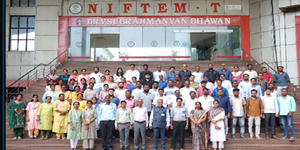
NEW DELHI, APR 19, 2026: THE Department of Food Business Management at the National Institute of Food Technology Entrepreneurship and Management (NIFTEM), Thanjavur organized a Two-Days Food Business Start-up Enabler Programme 2.0 on 16th and 17th April 2026 at the NIFTEM-T campus. The programme was designed to strengthen entrepreneurial capabilities and provide structured guidance to aspiring food entrepreneurs, students, and early-stage start-up founders.
The primary objective of the programme was to enhance participant's knowledge and build competencies in food business entrepreneurship. It aimed to provide practical exposure to the processes involved in launching, managing, and scaling a food enterprise in yesterday's competitive and innovation-driven market environment. The initiative also sought to create awareness about institutional support systems, regulatory requirements, and financial assistance available for food start-ups in India.
A total of 82 participants from across the country attended the programme. The participants included aspiring entrepreneurs, individuals interested in establishing ventures in the food processing sector and students. The programme provided an interactive platform for knowledge exchange, enabling participants to understand the evolving dynamics of the food business ecosystem and explore emerging opportunities.
The session talks were delivered by subject experts and professionals with experience in food business, research, and industry practices. The programme covered a wide range of topics essential for food business development, including packaging technologies, corporate laws, governance and taxation, branding and marketing strategies, pricing techniques, and export opportunities. Participants were also introduced to institutional support systems, incubation facilities, and technologies available for entrepreneurs.
Further, the sessions focused on operational and strategic aspects such as supply chain management, inventory control, food processing technologies, and machinery selection. Emphasis was also given to digital marketing, e-commerce, customer engagement, business idea validation, and new product development. Important topics such as food safety regulations, quality assurance systems, public policies, and grant-in-aid schemes supporting food start-ups were also discussed.
Overall, the programme provided comprehensive exposure to technical, managerial, and regulatory aspects required for developing and sustaining successful food business enterprises. It effectively equipped participants with the knowledge and confidence to pursue entrepreneurial opportunities in the rapidly growing food processing sector.