Union Govt Secy reviews status of Brackish water Aquaculture cluster notified under PMMSY
Published: Apr 17, 2026
By TIOLCorplaws News Service
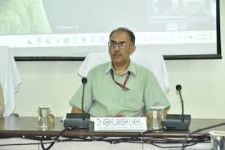
NEW DELHI, APR 17, 2026: DR. Abhilaksh Likhi, Secretary, Department of Fisheries, Ministry of Fisheries, Animal Husbandry and Dairying (MoFAH&D), Government of India, chaired a review meeting in Bhimavaram on 16th April 2026 to review the progress of Brackishwater Aquaculture Cluster notified under PMMSY and interact with mp farmers engaged in Brackish water aquaculture in the region. During the visit, the Union Secretary also interacted with mp and fish farmers. to understand the gaps and challenges faced on ground. The review meeting was held in a hybrid mode and saw participation from officials from the Department of Fisheries, Government of India and the Department of Fisheries, Government of Andhra Pradesh, representatives of fisheries clusters from States and Union Territories, scientists from ICAR fisheries institutes, and representatives of NFDB, CAA, MPEDA, NABARD, fish farmers, mp farmers, fisheries cooperatives, Seafood Exporters, Fisheries universities and Fisheries colleges.
Addressing the Fish farmers, Dr. Abhilaksh Likhi, Secretary, Department of Fisheries, MoFAH&D, GoI, appreciated the active participation of all stakeholders and thanked farmers for their valuable feedback, which he said is critical for both Central and State policy responses. He congratulated the Government of Andhra Pradesh for achieving 64 lakh tonnes of fish production through proactive initiatives. He said that continued support will be provided to the Bhimavaram cluster, with focused action to address gaps across pre-production, production and post-production stages. He emphasised promoting fish consumption through tie-ups with defence and other government institutions, encouraged exposure visits for farmers within India and abroad, and stressed adoption of a whole-of-fish approach and fish waste utilisation, including a proposed tripartite collaboration with Iceland. He also called for setting up a CIBA-led awareness camp in Bhimavaram on new technologies and good aquaculture practices and directed MPEDA to strengthen market and export linkages while sensitising farmers on certification and traceability. All stakeholders of the value chain were urged to support for the development of the cluster going forward.
Special Chief Secretary, Andhra Pradesh, B Rajsherkhar, emphasised that fishers is central to India's Blue Economy and play a pivotal role in driving sustainable growth and export earnings. He underlined that traceability and global compliance are no longer optional and stressed the need for strict adherence to international standards. Highlighting Andhra Pradesh's extensive coastline and marine potential, he called for increased investment in seaweed farming and artificial reefs, noting their significant scope for export-oriented development and resource sustainability.
Sagar Mehra, Joint Secretary (Inland Fisheries), Department of Fisheries, MoFAH&D, GoI, stated that the 34 fisheries clusters are being developed as growth engines to integrate production, processing, market linkages and exports. He emphasised the need to strengthen last-mile infrastructure, promote technology adoption including IoT, biofloc and RAS, improve cold-chain facilities and address low credit absorption by bridging gaps between FIDF, KCC and market linkages.
Deputy Director General (Fisheries Science) ICAR, Dr. J K Jena highlighted that India is the second-largest fish producer globally and praised Andhra Pradesh's contribution to national output. He stated that the Bhimavaram cluster has the potential to emerge as a leading aquaculture zone, with ICAR institutes, including CIBA, supporting the cluster through technology dissemination, disease diagnostics and surveillance programmes. He emphasised that future growth must be anchored in sustainability, with stronger convergence among farmers, research institutions, public-private agencies and other value-chain stakeholders.
Rama Shankar Naik, Commissioner of Fisheries, Andhra Pradesh, underscored the need to meet global quality and compliance requirements by promoting value-added seafood products to enhance farmer incomes. He stressed that desilting and clearing of creeks and drainage systems are critical for maintaining water quality, reducing disease incidence and improving productivity. He also highlighted the importance of Good Aquaculture Management Practices, formation of FFPOs, provision of laboratory facilities, and requested GST reduction on aerators to reduce input costs for farmers.
Chief Executive, National Fisheries Development Board, Dr Bijay Kumar Behera, presented on the Next five-year plan for the Bhimavaram cluster and highlighted the expectations from all value chain stakeholders.
key stakeholders shared inputs on strengthening the Bhimavaram fisheries cluster through technology, infrastructure and market-oriented interventions. CIBA highlighted advances in hatchery and genetic improvement technologies, integrated mp–seaweed farming models, super-intensive mp culture with enhanced bio-security, disease surveillance, traceability systems and fish-waste utilisation. MPEDA informed about the establishment of a regional office and two testing laboratories at Bhimavaram to support exports, along with regular capacity-building programmes and farmer sensitisation on certification and traceability. NABARD emphasised progress in formation of Fish Farmers Producer Organisations (FFPOs) in the cluster and strengthening of credit linkages with regional banks to improve financial inclusion across the cluster. CMFRI highlighted development of hatchery technologies for key brackishwater species, initiatives on seaweed value-added products, deployment of artificial reefs and the need for infrastructure support to promote multi-species aquaculture, nurseries and live-fish transportation.
During the meeting, fish farmers appreciated the direct support being extended under the Pradhan Mantri Matsya Sampada Yojana (PMMSY). However, they highlighted several challenges requiring focused attention. Key concerns included weak market linkages and the need to promote domestic consumption, with suggestions to include fish and seafood in government canteens, hospitals and mid-day meal schemes. Farmers underscored the importance of strict regulation and monitoring of broodstock and seed quality to prevent disease and virus infiltration, and recommended introduction of pathogen-resistant broodstock. Limited access to institutional credit was cited as a major constraint, along with requests for income tax exemptions for aquaculture activities on par with agriculture. Farmers emphasized the need for improved scientific management practices and capacity building to enhance productivity and profitability. It was also highlighted that feed constitutes nearly 70% of production costs and requested improvement in feed quality. While expressing willingness to adopt IoT-based technologies, they stressed the need for subsidised technological tools to make adoption viable.
Seafood exporters pointed out that despite being recognised as a "Town of Export Excellence", improvements in last-mile infrastructure, particularly connectivity from farms to processing units are required. Concerns were also raised over rising shipping tariffs, the need to promote by-product utilisation for higher value addition, and limited flexibility to increase unit prices in competitive global markets.