MoS asks private sector to accelerate its participation in R&D activities
Published: Apr 10, 2026
By TIOLCorplaws News Service
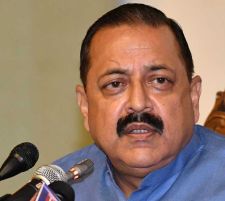
NEW DELHI, APR 10, 2026: UNION Minister for Science & Technology and Earth Sciences Dr Jitendra Singh, yesterday called upon the private sector to accelerate its participation in Research & Development (R&D) activities, emphasising that industry engagement is essential to strengthening India's innovation ecosystem.
The Minister said the government has taken a series of enabling steps - including opening up sectors such as space and nuclear energy to private players and creating dedicated mechanisms like the RDI fund-and stressed that industry must now respond by investing more actively in R&D and partnering in the country's scientific and technological advancement.
Speaking at the release of two NITI Aayog reports on easing research and development processes, Dr. Jitendra Singh emphasised that the focus must shift from how systems are designed to how they are actually experienced by researchers on the ground. He said evidence-based documentation of these lived challenges strengthens the case for reform and helps carry concerns beyond the scientific community to policymakers.
"There is no denying that research can flourish only when there are no impediments, no slowdowns and no avoidable interruptions," Dr. Jitendra Singh said, adding that even when external disruptions are unavoidable, "the ponderables must be addressed" to prevent compounding delays.
The Minister pointed to a growing mismatch between India's expanding scientific capabilities and the systems that support them, noting that while the country has "no dearth of human resources" and its scientific talent is increasingly recognised globally, institutional and procedural frictions continue to constrain outcomes.
Highlighting the changing nature of research, Dr. Jitendra Singh said scientific work is now deeply interconnected with industry, finance and global collaboration, making it essential for systems to facilitate interdisciplinary and cross-sectoral engagement. He noted that the government has taken steps to open sectors such as space and nuclear energy to private participation, signalling a broader shift in the research and innovation landscape.
At the same time, he flagged the limited participation of private industry in research funding and execution, arguing that government support alone cannot sustain long-term innovation. Referring to the recently introduced Research, Development and Innovation (RDI) funding approach, Dr. Jitendra Singh described it as an unusual intervention aimed at incentivising private sector engagement, even as he acknowledged that industry readiness remains uneven.
He also drew attention to gaps in corporate social responsibility (CSR) spending for research, noting that even existing allocations are not being fully utilised for R&D purposes, and called for a stronger culture of philanthropy and institutional support for scientific work.
The Minister cited initiatives such as "One Nation, One Subscription" for research journals as examples of enabling measures that improve access to knowledge, while stressing that incremental improvements in routine processes-such as approvals, funding flows and administrative clearances-can collectively have a significant impact on research productivity.
Suman Bery, Vice Chairman, NITI Aayog, said the initiative on easing R&D processes is rooted in long-standing calls from the scientific community to reduce administrative burdens and improve system efficiency. He emphasised that as India's research ecosystem expands, the focus must shift towards ensuring coherence across the entire research lifecycle-from approvals and funding to execution and application-so that avoidable delays do not disrupt outcomes. Highlighting findings from extensive consultations, Bery noted that inefficiencies often arise at the intersections of systems rather than within individual processes, calling for a more coordinated, system-wide approach to reform. He added that clearer processes, institutional support for collaboration, and alignment with global practices would be key to enabling research continuity and translating knowledge into real-world applications.
V. K. Saraswat, Member, NITI Aayog, said India's research ecosystem is at a "point of transition", with systemic inefficiencies such as funding delays and administrative bottlenecks continuing to affect both the pace and quality of research. He called for greater institutional autonomy, reduced compliance burden on researchers, and stronger linkages between research, innovation and industry, alongside coordinated, top-down reforms in funding and policy frameworks.
The Principal Scientific Adviser Prof. A.K. Sood said improving ease of doing R&D must remain a continuous effort, noting that despite recent progress, key gaps persist. He flagged low funding success rates, unresolved issues such as the Treasury Single Account (TSA) framework, and constraints in hiring and infrastructure, urging stronger coordination and follow-through to translate recommendations into action.
The reports released by NITI Aayog draw on consultations with researchers across institutions and highlight the need for greater flexibility, transparency and predictability in research systems. They emphasise that efficiency is not only about reducing timelines but also about providing clarity, enabling scientists to plan work with continuity and confidence.
Dr. Jitendra Singh concluded that strengthening India's research ecosystem requires sustained, system-wide engagement beyond government, involving institutions, industry and society at large. "Science today is too serious a subject to be left to scientists alone," he said, calling for broader stakeholder participation to ensure that research translates into scalable technologies, products and solutions.
The focus on easing research processes comes as India seeks to expand its innovation capacity and align its scientific ecosystem with broader economic and strategic goals, including increased global collaboration and the transition from research outputs to real-world applications.