International Conference on Spacecraft Mission Operations being held in Bengaluru
Published: Apr 09, 2026
By TIOLCorplaws News Service
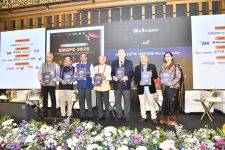
NEW DELHI, APR 09, 2026: THE second edition of the International Conference on "Spacecraft Mission Operations: SMOPS- 2026" with theme of "Innovative Operations for Smart and Sustainable Space Mission Management - Next Generation" is being held during 8-10 April, 2026 in Bangalore, India. The conference, jointly organized by Indian Space Research Organization (ISRO), Astronautical Society of India (ASI) and International Academy of Astronautics (IAA), is aimed to cover a wide range of topics related to mission operations management, advanced mission design, automation, large constellations management, human spaceflight mission, space robotics, space policy, lunar and interplanetary exploration, cybersecurity in space system, Artificial Intelligence, present and future trends in ground station operations etc., while addressing the futuristic techniques in both upstream and downstream segments. An exclusive workshop for students and young professional was organized on the 10th as a part of SMOPS.
The conference was inaugurated on 8th April by the erstwhile Chairman, ISRO/Secretary DOS, A S Kiran Kumar, in the presence of Dr. V. Narayanan, Chairman, ISRO/Secretary DOS, M Sankaran, Director, URSC, Dr. Jean Michel Contant, Secretary General, IAA, and Dr. A K Anil Kumar, Director ISTRAC.
The key themes featured in this conference, one-of-its-kind in India, include
- Mission Operations: Turning Design into Achievement
- Navigating Current Milestones & Future Horizons
- Mission Design and Operations
- Mission Operations Strategy and Future Roadmap
- AI and Robotics
- Ground Segment and Constellations
- Human Space program, Interplanetary missions and Ground Segment
- Orbits of Opportunity: Contributing to the New Space Economy
- Human Space Program Challenges
- Robotic Mission Operations on ISS
- Space Domain Awareness: Concepts, Capabilities and Applications
- Leveraging Space Applications
Apart from 120 oral and 88 poster presentations, leading domain experts from ESA, CNES, DLR, IBMP and IKI Russia, NASA, JAXA, Celestrak, Eumetsat, Eutelsat, TU Delft, Canada, participated as keynote speakers and panelists. This conference also served as a unique networking platform where the participating space agencies, start-ups, industry and academia shared views on the state-of-the-art technologies and tackling the emerging challenges in a rapidly evolving space landscape. The last day of the conference featuring a workshop with invited talks on Robotic Mission Operations on ISS, Space Domain awareness, Space Applications, Human space missions and astronaut training, has an overwhelming participation.
During the inaugural address, Chairman ISRO emphasized the critical role of meticulous planning and flawless execution of spacecraft mission operations for the success of the space missions. He reiterated the need for the Indian space sector to proactively engage with global counterparts in finding innovative solutions to the evolving challenges in the space sector.
One of the central themes was navigating the ongoing and upcoming challenges, from both technological and policy aspects, of increasing complexity of diversified, distributed mission operational concepts, arising out of disruptive technological innovation, advent of large constellations, exacerbating space traffic congestion, and more ambitious human space explorations beyond the realm of Earth. The pivotal role of Artificial Intelligence (AI) and Machine Learning (ML), in enabling more autonomous and efficient mission operations with human-machine synergy were underscored across the sessions.
ISTRAC, the hub of spacecraft operations for all Low Earth Orbit and Deep Space missions, from Aryabhata satellite to NISAR, has several landmark achievements to its credit, including the historic Mangalyaan mission, the soft landing of Chandrayaan-3, insertion of Aditya-L1 spacecraft in Lagrangian Point around Sun and docking experiments in SpaDEx mission took leading role in organizing SMOPS. In the backdrop of opening up of Indian space sector and ISRO embarking on Human Space mission, SMOPS served as a rich confluence of ideas across multiple disciplines, fostering collaboration, cooperation, and partnerships amongst the global space community to chart a safe, sustainable and smart roadmap for future space mission operations.