India must build Future-Ready Workforce for a Global Automotive Industry: Kumaraswamy
Published: Sep 01, 2026
By TIOLCorplaws News Service
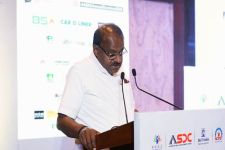
NEW DELHI, SEP 01, 2026: UNION Minister for Heavy Industries H.D. Kumaraswamy on Monday underlined the need to make skilling, upskilling and employment generation for India's younger generation a central priority as the country moves towards Viksit Bharat @2047, stressing that India's skilled workforce must be prepared not only to meet domestic requirements but also the growing needs of industries across the world.
Addressing the Automotive Skills Development Council (ASDC) Annual Conclave 2026 in New Delhi, the Union Minister said India's automotive sector is entering a new era of transformation, driven by electric mobility, automation, connected technologies, advanced manufacturing and Industry 4.0.
Highlighting the vision of Prime Minister Narendra Modi, Kumaraswamy said India is steadily moving beyond being merely a large automotive market and is emerging as a major global centre for automotive manufacturing, technology and mobility solutions.
"India's ambition should not be limited to meeting our domestic manpower requirements. We must aspire to make India a global source of skilled automotive talent."
The Minister emphasised that the rapid transformation of the automotive industry would require a workforce capable of adapting to new technologies and evolving workplace requirements. He said the focus must extend beyond simply training candidates to ensuring that young people acquire skills that translate into meaningful employment opportunities.
"Creating greater employment opportunities by skilling and upskilling our younger generation is essential not only for India, but for the entire world."
He said the growing adoption of electric mobility, automation and advanced automotive technologies is creating new employment opportunities across vehicle manufacturing, battery production, charging infrastructure, servicing and after-sales support. This, he added, makes it imperative to develop technicians, engineers and professionals with specialised and industry-relevant capabilities.
Stronger Industry-Skill Linkage
Kumaraswamy stressed that the responsibility for building this workforce cannot rest with skilling institutions alone. Automobile manufacturers, component manufacturers, dealerships and other industry stakeholders will have a major role to play in defining the skills required for the future and ensuring that training reflects real-world requirements
"Skilling cannot succeed in isolation from the workplace. Industry participation is essential to ensure that training reflects real-world requirements and keeps pace with emerging technologies."
He called for a stronger and more seamless relationship between education, skills and employment, with curricula, training methods and assessment systems continuously updated in consultation with industry.
The Minister said automobile manufacturers must actively participate in this process and help create a talent pipeline capable of meeting the requirements of an increasingly technology-driven industry.
"We need to build a stronger and more seamless relationship between education, skills and employment. Our skilling ecosystem must evolve alongside the growth and transformation of the automotive industry."
ASDC's Role in Building a Global Talent Pool
Kumaraswamy said institutions such as ASDC have an important role in ensuring that India's workforce remains aligned with the changing requirements of the automotive sector.
He said ASDC must continue to work closely with industry to anticipate future requirements and equip young Indians with skills that are relevant both domestically and internationally.
The Minister said India should look beyond creating a workforce merely for its own requirements and position itself as a global supplier of skilled automotive professionals.
"Our responsibility is not merely to create certified candidates, but to create professionals who can contribute to India's automotive growth and compete at global standards."
He also underlined the importance of continuous upskilling and reskilling, particularly as new technologies rapidly change the nature of jobs in the automotive sector.
43 Candidates Flagged Off for Romania
During the programme, Kumaraswamy launched the ASDC Annual Report and flagged off 43 candidates placed in Romania, highlighting the growing international opportunities available to skilled Indian youth.
The Minister said such opportunities demonstrate how India's investment in skills can create pathways for young Indians to participate in the global workforce.
The ASDC's work is already expanding significantly. During FY 2025–26, the council impacted 5,08,173 learners, conducted 1,53,240 assessments and generated 2,88,756 apprenticeship contracts across approximately 3,700 establishments.
With the automotive industry undergoing a fundamental technological transformation, Kumaraswamy said the partnership between government, industry, academia and skilling institutions must become stronger.
"India has the ambition, the market and the manufacturing opportunity. Our collective responsibility is to ensure that we also have the skilled workforce capable of delivering on that ambition."
He said the government would continue to support initiatives that strengthen manufacturing capabilities, promote technology adoption and develop the skills required for the industries of the future.
"A future-ready India requires a future-ready workforce. Through skilling, upskilling and strong industry participation, we can create opportunities for our youth in India and across the world."
The Union Minister concluded by stressing that India's demographic strength can become one of its greatest economic assets if the country succeeds in equipping its younger generation with the right skills and connecting those skills to employment opportunities.