MSDE convenes India-Japan Stakeholder Consultation to strengthen skilling
Published: Aug 17, 2026
By TIOLCorplaws News Service
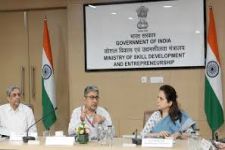
NEW DELHI, AUG 17, 2026: THE Ministry of Skill Development and Entrepreneurship (MSDE), Government of India, convened the India-Japan Stakeholder Consultation on Skill Development in New Delhi, on Friday, bringing together representative from Ministry of External Affairs, State Governments and Sending Organizations, along with Japanese government representatives, Japanese industry representatives, recruitment agents, training partners and other key stakeholders, to strengthen cooperation on skill development and workforce mobility between India and Japan.
The consultation focused on taking forward the Action Plan for India-Japan Human Resource Exchange and Cooperation, jointly released during the 15th India-Japan Annual Summit in 2025. Discussions centred on preparing Indian youth for employment opportunities in Japan through industry-relevant training, Japanese language and cultural preparation, recognised assessments, stronger employer engagement and closer coordination among institutions in both countries.
The consultation was addressed by Jayant Chaudhary, Minister of State (Independent Charge) for Skill Development and Entrepreneurship and Minister of State for Education, Government of India; H.E. Mr. Ono Keiichi, Ambassador of Japan to India; Ms. Gina Uika, Joint Secretary, Emigration Policy & Welfare (EP&W) Division, Ministry of External Affairs; Ms. Debashree Mukherjee, Secretary, MSDE; Niranjan Kumar Sudhanshu, Additional Secretary, MSDE; and Arun Kumar Pillai, CEO, National Skill Development Corporation (NSDC). Representatives from Zenken Corporation, Sompo Care, Fourth Valley, Konoike Group and Toyota Kirloskar were also present at the consultation. The programme also featured an audio-visual presentation highlighting the experiences of Indian candidates trained and employed in Japan, showcasing the tangible outcomes of existing cooperation frameworks.
Speaking at the consultation, Jayant Chaudhary, Minister of State (I/C) for Skill Development and Entrepreneurship and Minister of State for Education, Govt of India, said, "India's young people must be enabled to access global opportunities with the right skills, confidence and preparation, adding that the focus is not only on creating overseas employment pathways but on ensuring that every candidate is equipped with relevant technical skills, language ability and workplace understanding. He noted that the partnership with Japan offers an opportunity to build structured pathways with strong industry participation, and said the discussions would help translate intent into clear action for expanding opportunities for Indian youth."
Delivering the Keynote address, H.E. Mr. Ono Keiichi, Ambassador of Japan to India, said "Japan and India possess complementary strengths, with Japan's growing demand for skilled human resources aligning with India's large pool of young talent. He emphasized the importance of connecting these strengths through appropriate skills development, Japanese language training and reliable employment pathways, and welcomed MSDE's efforts to bring together government, industry and training institutions for practical cooperation that strengthens economic and people-to-people ties between the two countries."
Ms. Debashree Mukherjee, Secretary, MSDE, highlighted, "The Action Plan provides a clear direction and the immediate task is to translate it into coordinated implementation across stakeholders. She highlighted the need for alignment between candidate mobilisation, domain skills, language training, assessment systems, pre-departure preparation and employer demand, noting that the consultation helped clarify responsibilities across Ministries, States, training institutions, Sending Organisations and industry. She reiterated that MSDE's focus will remain on quality, relevance and outcomes to ensure candidates are well prepared and employers are confident in their skills."
The consultation brought together a wide cross-section of Indian and Japanese stakeholders, including MSDE institutions, the Ministry of External Affairs, Emigration Policy & Welfare (EP & W), Ministry of Development of North Eastern Region, State skill and labor departments, State recruitment agencies and empaneled Sending Organisations under the Technical Intern Training Programme (TITP) framework. Japanese participation included the Embassy of Japan in India, Japan Foundation, Japan International Cooperation Agency, Japan External Trade Organization, Japan International Trainee and Skilled Worker Cooperation Organization, Japan Chamber of Commerce and Industry in India, and Ministry of Economy, Trade and Industry (METI), Government of Japan bringing together policy, skilling, training, recruitment and employer perspectives on a single platform.
The three sessions of the consultation focused on key aspects of India–Japan skill cooperation. The first session examined skilling pathways under Technical Intern Training Programme (TITP), Specified Skilled Worker (SSW) and upcoming Employment for Skill Development Programme (ESDP), focusing on implementation structures, areas of convergence and ESDP readiness. The second session focused on the Action Plan on Human Resource Exchange, with discussions on expanding Japanese language training, sector-specific curricula, assessment access and stronger coordination among the Centre, States, industry and training institutions.
The third session brought Japanese recruitment companies and employers into direct dialogue with stakeholders, providing insights into occupational skills, language proficiency, workplace readiness and candidate support, and emphasizing alignment with real-time industry demand. Together, the sessions identified key areas for coordinated action to strengthen ESDP implementation and build effective India–Japan workforce pathways.
A key outcome of the consultation was to develop a road map for skilling for Japanese requirements. The roadmap will provide greater clarity on the ESDP pathway and its convergence with existing pathways such as TITP and SSW, while integrating actions across candidate mobilisation, technical and domain training, Japanese language and cultural preparation, assessment systems, employer engagement and pre-departure readiness.
The consultation also identified key implementation priorities and operational gaps, including the need to expand Japanese language training, strengthen assessment infrastructure, improve awareness of verified pathways, enhance coordination among States, Sending Organisations, training institutions and industry, and align training with Japanese employer requirements for skills, language proficiency and workplace readiness.
The roadmap will define short-, medium- and long-term actions, with clear responsibilities across Ministries, State Governments, implementing agencies, training institutions and industry, supported by measurable milestones and a structured governance and review mechanism. This will provide a multi-stakeholder action framework to strengthen ESDP implementation, deepen employer engagement and build more effective India-Japan workforce pathways.