House Panel deliberates on strengthening Human-Wildlife Conflict Mitigation through Technology
Published: Aug 06, 2026
By TIOLCorplaws News Service
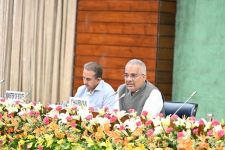
NEW DELHI, AUG 06, 2026: THE Parliamentary Consultative Committee of the Ministry of Environment, Forest and Climate Change met yesterday in New Delhi, under the Chairmanship of the Union Minister for Environment, Forest and Climate Change, Bhupender Yadav. The agenda of the meeting was to deliberate on the issue of Human-Wildlife Conflict (HWC) and the measures required for strengthening prevention, mitigation and long-term coexistence between people and wildlife. Dignitaries in attendance included Union Minister of State (EFCC), Kirti Vardhan Singh, along with Members of Parliament as part of the Committee, besides senior officers of the Ministry, PCCFs and Chief Wild Life Wardens of participating States.
The Committee was apprised of the follow-up action taken on the directions issued during its previous meeting held on 18.12.2025. These included consultations by States and Union Territories with Members of Parliament from conflict-affected areas. During the meeting, the Ministry highlighted that conflict patterns vary across landscapes, with human-elephant conflict being predominant in several States, while conflicts involving tigers, leopards, bears, rhinoceroses, wild boars, gaurs, primates and other species require location-specific management approaches.
The Committee was informed about the establishment of the Centre of Excellence on Human-Wildlife Conflict (CoE-HWC) at SACON, WII South Centre, Coimbatore, announced by the Prime Minister of India, during the 7 th National Board for Wildlife meeting. The Centre has been established as a national institution for scientific research, technological innovation, policy support, capacity building and community-centred approaches for effective management of human-wildlife conflict. The Committee also noted the launch of the National Human-Wildlife Conflict Portal on 10.07.2026, as a unified digital platform for recording conflict incidents, data management, knowledge sharing and decision support. Further, it was informed that the Regional Action Plan (RAP) on Elephant Conservation for South India has been approved.
Presentations were made by the States of Assam, Karnataka, Kerala, Madhya Pradesh, Uttarakhand and Uttar Pradesh, highlighting their conflict scenarios, mitigation measures, community participation initiatives, use of technology, institutional mechanisms and recommendations for strengthening national efforts. The experiences presented underscored the importance of landscape-specific planning, rapid response systems, habitat improvement, protection of wildlife corridors, scientific monitoring, early warning systems, community engagement and inter-State coordination.
The discussions emphasised that effective management of human-wildlife conflict requires an integrated approach combining ecological conservation with protection of human lives and livelihoods. Members deliberated upon the use of modern technologies including GIS, artificial intelligence, drones, radio telemetry and predictive analytics, while also stressing the importance of strengthening frontline capacity, improving compensation delivery, enhancing public awareness and promoting community participation in conservation.
Highlights of the Presentations made by the Six States are as below:
Assam: The Government of Assam presented its landscape-based strategy for mitigating human-wildlife conflict involving elephants, tigers, leopards, rhinoceroses, wild buffalo and wild boar. The State highlighted the constitution of Zonal Human-Wildlife Conflict Risk Reduction Committees for preparing region-specific action plans focusing on habitat restoration, corridor protection, early warning systems, rapid response, community participation and livelihood diversification. The Committee appreciated the zonal planning approach and emphasised documentation of its outcomes for replication in other conflict-prone landscapes.
Karnataka: Karnataka showcased its integrated six-pillar model for predictive human-wildlife conflict management, based on engineering interventions, AI-enabled surveillance, command centres, rapid response teams, community volunteer networks and e-Parihara digital compensation systems. The State also suggested a National Human-Wildlife Conflict Mission, common Standard Operating Procedures, corridor restoration and stronger inter-State coordination for managing transboundary elephant populations. The Committee appreciated Karnataka's technology-driven approach and recommended wider dissemination of best practices among States.
Kerala: The State highlighted its integrated institutional framework, including declaration of Human-Wildlife Conflict as a State-Specific Disaster, deployment of Rapid Response Teams and Primary Response Teams, identification of 273 conflict-affected Panchayats and implementation of community-based initiatives such as Jana Jagaratha Samitis and the SARPA volunteer programme. The State also emphasised wildlife corridor restoration, habitat management, responsible tourism and technology-enabled monitoring. The Committee noted Kerala's strong institutional and community-based approach and encouraged continued sharing of successful interventions with other States.
Madhya Pradesh: MP presented its 'Prevention First' model for human-wildlife conflict mitigation integrating AI-enabled surveillance, GPS tracking, drones, Gajrakshak, rapid response teams, species-specific Standard Operating Procedures, time-bound compensation and extensive community participation through Bagh Mitra, Hathi Mitra, and Eco-Development Committees. The State also highlighted habitat management, wildlife health support and science-based species management, including translocation of conflict animals. The Committee appreciated the integration of technology, community participation and timely relief mechanisms and encouraged further strengthening of predictive conflict management.
Uttarakhand: The State presented its strategic roadmap for conflict mitigation in priority landscapes through an Integrated Command and Control Centre, 24×7 Helpline (1926), e-surveillance, GPS tracking, habitat restoration, bio-fencing, timely compensation and village-based volunteer networks. The State also outlined its long-term strategy focusing on wildlife-sensitive landscape planning, district-level monitoring committees and strengthening coexistence measures under the 'Living with Leopards/Tigers' initiative. The Committee appreciated Uttarakhand's integrated landscape approach and stressed the importance of technology-enabled early warning systems and community preparedness.
Uttar Pradesh: UP highlighted that leopard-related incidents constitute the majority of human-wildlife conflict cases in the State, with the Terai Arc Landscape being the principal hotspot. The State presented its strategy based on Rapid Response Teams, rescue centres (4 constructed), solar fencing, early warning systems, community volunteer programmes, scientific monitoring and strengthened conservation interventions beyond Protected Areas. The Committee appreciated the State's focus on scientific management and advised continued strengthening of community-based mitigation and monitoring systems in high-conflict landscapes.
Union Environment Minister, Yadav, appreciated the initiatives undertaken by the States and observed that the challenge of human-wildlife conflict must be addressed through a balanced approach that combines scientific management, institutional coordination, technology-enabled monitoring and active involvement of local communities. He emphasised that the National Human-Wildlife Conflict Portal and the Centre of Excellence would provide an important institutional framework for developing data-driven strategies, facilitating knowledge exchange and supporting States in adopting best practices. Earlier, addressing the meeting, MoS (EFCC), Singh, suggested that a habitat-based scientific study needs to be carried out on its carrying capacity, and ascertained whether the ecosystem has sufficient resources to sustain the wildlife population. This would help in better planning of strategy to augment resources and manage human-wildlife conflict.
The meeting concluded with a detailed discussion among Members of Parliament on measures required to strengthen national and State-level efforts for reducing human-wildlife conflict while ensuring long-term conservation of India's rich wildlife heritage.