NMCG's focus on Nature Based Solutions: Initiation of two pilot projects and training programs on NbS
Published: Jul 10, 2026
By TIOLCorplaws News Service
NEW DELHI, JULY 10, 2026: RIVER rejuvenation requires a comprehensive approach that combines conventional wastewater treatment infrastructure with sustainable ecological interventions. While sewerage networks and Sewage Treatment Plants (STPs) remain the cornerstone of pollution abatement, the National Mission for Clean Ganga (NMCG) is increasingly integrating Nature-based Solutions (NbS) to complement these efforts. Alongside measures to ensure environmental flows (E-Flows) for maintaining the continuous flow of rivers, NMCG is promoting Nature-based Solutions to strengthen ecological restoration, improve river ecosystem health and build resilient water management systems. This integrated approach reflects the Mission's commitment to achieving long-term and sustainable river rejuvenation through a combination of engineering and nature-based interventions.
As part of this comprehensive strategy, NMCG is mainstreaming Nature-based Solutions through the Sustainable River Rejuvenation (SRR) programme by implementing pilot projects based on constructed wetlands for in-situ treatment of urban drains, while simultaneously promoting research, innovation and capacity building for their wider adoption. By augmenting Nature-based Solutions alongside conventional treatment technologies, NMCG is advancing a holistic river basin management approach that integrates pollution abatement, ecological restoration and institutional strengthening to rejuvenate rivers across the Ganga basin.
The two pilot projects-at the Shastri Park Drain and Kailash Nagar Drain, with combined treatment capacity of approximately 10 MLD, both discharging into the Yamuna-mark an important step towards adopting sustainable, low-energy and climate-resilient approaches for urban drain management. Unlike conventional treatment systems that rely heavily on mechanical infrastructure and energy-intensive processes, these interventions are based on constructed wetland systems, which replicate the treatment functions of natural wetlands.
The treatment systems integrate a combination of stone masonry structures for regulating water flow and enhancing hydraulic retention time, rock filters for removing suspended solids, aquatic vegetation for nutrient uptake and oxygen transfer, and phytoremediation using carefully selected plant species capable of absorbing, stabilising and degrading pollutants, including excess nutrients and certain heavy metals. Working together, these natural processes improve dissolved oxygen levels, reduce organic pollution, enhance biodiversity and restore ecological functions while requiring significantly lower operational and maintenance inputs.
Steady progress has already been achieved at both project sites. At the Kailash Nagar Drain, site clearance through desludging and desilting has been completed, brick lining works are currently underway, and installation of rock filters will follow in the next phase. At the Shastri Park Drain, preparatory desludging and desilting activities are in progress, paving the way for installation of stone masonry structures, rock filtration systems and aquatic plant species. Together, these projects are expected to demonstrate the effectiveness of Nature-based Solutions in treating around 10 MLD of wastewater while serving as scalable and cost-effective models for urban drain management across the Ganga basin.
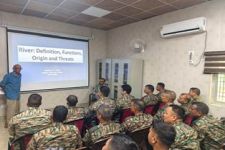
Recognising that successful implementation of Nature-based Solutions requires strong technical expertise and institutional capacity, NMCG is simultaneously investing in knowledge creation and capacity development. Through the Knowledge Sharing and Development Centre (KSDC) initiative, 6 capacity-building and training programmes were organised between August 2025 and March 2026, benefiting 100+ participants from key stakeholder organisations. The participants included engineers and officials from the Yamuna Task Force, District Ganga Committees (Uttarakhand), State Mission for Clean Ganga (SMCGs), Forest Departments, Irrigation Departments and other agencies involved in river rejuvenation and watershed management.
The training programmes focused on strengthening technical capacity for planning, designing and implementing Nature-based Solutions, with emphasis on constructed wetlands, ecological restoration and sustainable river management. By bringing together officials from multiple departments and institutions, the programmes promoted inter-agency collaboration and facilitated the adoption of best practices for river rejuvenation. By fostering knowledge exchange and building professional capacity, NMCG is creating a robust ecosystem that supports the wider adoption of innovative and science-based river restoration approaches.
Expanding the application of Nature-based Solutions beyond pilot interventions, NMCG is also implemented a Constructed Wetland project at Khatauli for the rejuvenation of River Kali, a tributary that receives significant domestic and industrial discharge before joining the Ganga basin. Designed as a sustainable and low-energy treatment system, the project harnesses wetland vegetation and natural biological processes to reduce the pollution load, improve water quality and support ecological restoration closer to the source.
By complementing conventional pollution abatement measures with nature-based interventions, the project exemplifies NMCG's integrated approach to river rejuvenation, combining engineering solutions with ecological restoration to create healthier and more resilient river ecosystems. By working with nature rather than against it, the Mission is laying the foundation for cleaner rivers, healthier urban ecosystems and more resilient water management systems, while creating scalable models that can guide river conservation efforts across the country.