Govt to curb Distress Sale in APT Crops; Value Addition to boost Farmers' Income
Published: Apr 08, 2026
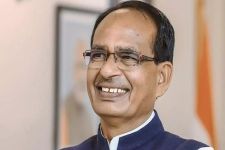
By TIOLCorplaws News Service
NEW DELHI, APR 08, 2026: UNION Minister for Agriculture & Farmers' Welfare and Rural Development, Shivraj Singh Chouhan, yesterday stated after the Regional Agriculture Conference held in Jaipur that the entire country will now be divided into different agro-climatic zones, and a separate agricultural roadmap will be prepared for each state. All farmers will be linked through a Farmer ID, ensuring that the entire system of distribution of fertilizers, seeds, crop insurance, and compensation becomes transparent and targeted. Under the National Edible Oil Mission-Oilseeds, building upon the record production of 429.89 lakh tonnes achieved in 2024-25 along with increased productivity, targets have been set to expand the oilseed cultivation area from 29 million hectares to 33 million hectares and increase production from 39.2 million tonnes to 69.7 million tonnes. Similarly, under the Pulses Mission, efforts will be made to strengthen self-reliance in pulses through enhanced seed production, establishment of dal mills, introduction of new seed varieties into the seed chain, and 100 percent procurement from willing farmers.
State-wise Agricultural Roadmap and Regional Conferences
Addressing the press conference, Chouhan said that this is the country's first regional conference where senior scientists from ICAR, agricultural experts, progressive farmers, FPOs, NAFED, NCCF, and institutions working across the value chain, from seeds to markets, have come together on a single platform. Earlier, only one national-level conference was held for Kharif and Rabi crops, where detailed discussions were not possible due to time constraints. He stated that the country will now be divided into five agro-climatic zones, and five regional conferences will be organized. Based on each state's climate, soil, water, and available resources, separate agricultural roadmaps will be prepared to determine the most suitable crops, varieties, and farming practices for each region.
Farmer ID: Backbone of Fertilizer, Seeds, Insurance, and Compensation
Chouhan informed that the work of creating Farmer IDs is progressing rapidly across all states, expressing confidence that a unified identity for all farmers will be established within approximately three months. This will ensure that farmers receive benefits of all schemes directly and accurately. He said that the fertilizer distribution model implemented in Madhya Pradesh based on Farmer ID will be replicated across the country. Under this system, farmers will not have to stand in queues; they will receive fertilizers based on their land and crop requirements. It will help curb fake products and black marketing. Tenant farmers will also be able to access fertilizers and other benefits through Farmer ID with the consent of the landowner. This ID will further serve as the basis for crop insurance, crop-loss compensation, and other benefits.
National Edible Oil Mission-Oilseeds: Record Progress and Future Expansion
Chouhan stated that under the National Edible Oil Mission-Oilseeds, oilseed production reached a record 429.89 lakh tonnes in 2024-25, compared to 396.69 lakh tonnes in 2023-24. Productivity has increased from 1314 kg per hectare in 2023-24 to 1412 kg per hectare in 2024-25, marking a significant achievement for farmers and demonstrating that with the right policies, seeds, technology, and incentives, the country is moving rapidly towards self-reliance in oilseeds. He further informed that in 2025-26, an additional 13.35 lakh hectares have been brought under oilseed cultivation through 1,076 value chain clusters. Additionally, 60 seed centres have been established, 50 seed storage units have been approved, and 400 oil mills have already been set up, with a target of establishing 800 mills to strengthen the entire value chain from production to processing and marketing.
Targets for Self-Reliance in Oilseeds: Area, Productivity, and Production
Chouhan stated that a provision of Rs.10,103 crore has been made to achieve self-reliance in oilseeds, ensuring full support to farmers in technology, seeds, irrigation, processing, and marketing. The targets include increasing the cultivated area from 29 million hectares to 33 million hectares, boosting productivity from 1353 kg per hectare to 2112 kg per hectare, and raising total production from 39.2 million metric tonnes to 69.7 million metric tonnes, thereby significantly reducing dependence on edible oil imports and increasing farmers' income through high-value crops.
Pulses Mission: Seeds, Dal Mills, New Varieties, and 100% Procurement
Chouhan stated that under the Pulses Mission, all states have been directed to maximize seed production to ensure availability of quality seeds to farmers. Financial assistance is being provided for seed production: Rs.4,500 per quintal for tur (pigeon pea), Rs.2,000 per quintal for urad/tur, and Rs.1,800 per quintal for gram, to encourage farmers to produce high-quality seeds. State-wise targets for subsidized seed distribution have also been set: 3,10,870 quintals for Madhya Pradesh, 2,45,000 quintals for Rajasthan, 87,500 quintals for Maharashtra, and 40,000 quintals for Gujarat. Special emphasis is being placed on rapidly bringing new pulse varieties into the seed chain, with 79 varieties identified in Rajasthan, 58 in Gujarat, 63 in Madhya Pradesh, and 58 in Maharashtra.
Pulses Production Hotspots, Dal Mill Network, and Financial Allocation
Chouhan noted that Madhya Pradesh, Maharashtra, Rajasthan, and Gujarat together contribute over 60% of the country's pulses production. Several districts-such as Narmadapuram (MP), Jhalawar and Tonk (Rajasthan), Gadchiroli (Maharashtra), and Junagadh (Gujarat)-are performing exceptionally well and will be developed as model districts. Districts with lower productivity will be reviewed, and special plans will be implemented to enhance output. To strengthen processing, a large network of dal mills is being developed: 55 in Madhya Pradesh, 34 in Maharashtra, 28 in Gujarat, 30 in Rajasthan, and 5 in Goa. For 2026-27, Rs.344 crore has been allocated to Madhya Pradesh, Rs.312 crore to Rajasthan, Rs.166 crore to Maharashtra, and Rs.31 crore to Gujarat under the Pulses Mission. Provision has also been made for 100% procurement of tur, urad, and masoor from willing farmers at MSP, ensuring income security similar to wheat and rice.
Viksit Krishi Sankalp, Integrated-Natural Farming, and Action Against Fake Inputs
Shivraj Singh Chouhan stated that the Viksit Krishi Sankalp Abhiyan will now be aligned with state-specific agro-climatic conditions and cropping cycles. Around 16,000 scientists, ICAR institutions, agricultural universities, and Krishi Vigyan Kendras will work directly with farmers under the 'Lab to Land' approach. To enhance income from small landholdings, integrated farming models will be promoted, including crops, fruits, vegetables, medicinal plants, livestock, beekeeping, fisheries, goat rearing, and agroforestry. There is also consensus on accelerating natural farming, protecting soil health, and enabling farmers to access premium markets through organic certification. He added that strong action has already been taken against fake fertilizers and pesticides, with several factories sealed. A comprehensive tracking system is being developed to monitor the supply chain from production to delivery. Given that the existing 1968 law provides only minor penalties, discussions are underway to introduce stricter legislation against fake seeds, fertilizers, and pesticides, with plans to bring amendments or a new law in the next session.
Crop Loss Assessment, Global Impact, APT Crops, and Flexible Funding
Chouhan informed that efforts are underway to scientifically assess crop losses using satellite-based remote sensing, enabling state governments to provide relief under SDRF (RBC 6(4)) and ensure that insurance claims under the Pradhan Mantri Fasal Bima Yojana are settled quickly through Farmer ID. He noted that global crises such as the Russia-Ukraine war impact fertilizers and agricultural inputs, but under the leadership of Narendra Modi, the government is committed to minimizing the impact on India, especially farmers. At present, sufficient fertilizer stocks are available for both Kharif and Rabi crops. To prevent distress sales in crops like potato, onion, and tomato (APT), state governments will procure directly from farmers and supply to major cities, with transportation and storage costs borne by the central government. This will ensure fair prices for farmers and reasonable prices for consumers. He further stated that the central government will ensure flexibility in funding for states based on their specific needs-whether for drip irrigation, mechanization, or processing-so that resources are allocated where they are most required.