Innovation and evidence are two pillars that will shape the next era of Unani medicine: MoS
Published: Feb 16, 2026
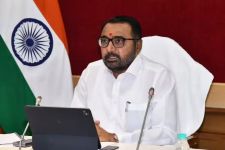
By TIOLCorplaws News Service
NEW DELHI, FEB 16, 2026: UNION Minister of State (Independent Charge) for Ministry of Ayush and Minister of State for Health & Family Welfare, Prataprao Jadhav inaugurated the renovated Co-location Centre of the Regional Research Institute of Unani Medicine (RRIUM), Mumbai, at the J.J. Hospital campus and presided over the Unani Day 2026 celebrations and the National Conference on "Innovation and Evidence in Unani Practice" in Mumbai. The two-day programme is being organised by the Central Council for Research in Unani Medicine (CCRUM), Ministry of Ayush, Government of India.
The renovated RRIUM Co-location Centre, originally established in 1984, has been upgraded at a cost of nearly Rs. 3.84 crore to enhance clinical services, research facilities and patient care in an integrative setting. The upgradation is aimed at strengthening Unani medicine facilities within the historic J.J. Hospital campus and promoting evidence-based research in collaboration with modern systems of medicine.
Speaking on the occasion, Prataprao Jadhav said that the upgradation of the Unani Research Centre at JJ Hospital reflects the strong commitment of Prime Minister Narendra Modi ji to make traditional systems of medicine an essential pillar of a modern, patient-centric healthcare framework. He noted that by bringing Unani and conventional medicine together under one roof, the renovated co-location centre will offer patients safe, effective, and holistic care supported by scientific research and evidence. This initiative, he added, will further strengthen the government's vision of integrating AYUSH systems into mainstream healthcare and promoting comprehensive well-being for all.
Highlighting the importance of innovation and research, Jadhav stated, "Unani medicine is a time-tested system rooted in rich clinical experience, but its future lies in how effectively we generate and present scientific evidence to the world." He emphasised that institutions like CCRUM and RRIUM, Mumbai must lead the way in undertaking high-quality clinical research, drug standardisation and translational studies so that Unani interventions can address emerging health challenges.
Referring to the theme of the National Conference, Jadhav said, "Innovation and evidence are the two pillars that will shape the next era of Unani medicine. Our endeavour is to ensure that every Unani formulation, procedure and therapeutic protocol is supported by robust data and aligned with global benchmarks of quality and safety." He urged researchers to leverage modern tools, including genomics, artificial intelligence and advanced diagnostics, to deepen the scientific understanding of Unani concepts and therapies.
The Minister also underlined the role of Maharashtra, Mumbai's premier medical institutions and Unani facilities in showcasing successful models of integrative healthcare. "By strengthening centres like RRIUM Mumbai and forging partnerships with leading hospitals and universities, we are creating a strong ecosystem where Unani medicine can demonstrate its full potential in public health, preventive care and chronic disease management," he added.
Babasaheb Patil, Minister of Co-operation, Government of Maharashtra, appreciated the organisation of Unani Day at Mumbai and the inauguration of the renovated Unani co-location facility at J.J. Hospital, describing it as a major step for providing affordable, people-centric care. He recalled his own positive experience of treatment through Unani medicine and underlined that traditional systems, when practised with discipline and patient compliance, can deliver significant results in chronic and difficult-to-treat conditions, especially for poor and underserved communities.
He emphasised that Maharashtra is committed to supporting the growth of Indian systems of medicine, including Unani, by improving infrastructure, strengthening colleges and hospitals, and enabling wider access in urban as well as rural areas. Stressing that "health is true wealth", he urged citizens to adopt preventive and holistic approaches promoted by Ayush systems so that the burden on hospitals is reduced and people can lead healthier, more productive lives. "Unani medicine offers affordable and effective care, especially for ordinary people, and Maharashtra will continue to support its expansion through better facilities and wider access," said Patil.
Vaidya Rajesh Kotecha, Secretary, Ministry of Ayush, highlighted that the 10th Unani Day celebrations and the National Conference on "Innovation and Evidence in Unani Practice" reflect the extraordinary growth of Unani medicine in the last decade, particularly in terms of research output, patient care and institutional development. He noted that through focused policy support, enhanced budgetary allocation and sustained leadership at the Ministry level, Unani institutions under CCRUM and National Institutes have significantly expanded their services, with patient footfalls, publications and accredited facilities registering multi-fold increases in recent years.
He further underlined that the Ministry of Ayush is working closely with the World Health Organization (WHO) and other global partners to establish international benchmarks for Unani education, research, clinical training and therapeutic interventions. Mentioning key milestones such as publication of WHO benchmark documents for training and practice in Unani medicine, inclusion of Unani morbidity codes in the ICD-11 Traditional Medicine Chapter, and ongoing work on classification of health interventions, he said these developments will not only facilitate convergence among Ayush systems but also enable countries worldwide to adopt Unani medicine with greater confidence and standardisation.
Dr. Maneesha V. Kothekar, Chairperson, National Commission for Indian System of Medicine (NCISM) emphasised that Unani, along with Ayurveda, Siddha and Sowa-Rigpa, represents the shared spirit of "unity in diversity" within Indian systems of medicine, where different medical traditions view health and the human body through diverse lenses but ultimately work towards the same goal of ensuring well-being for society. She commended the renovation and inauguration of the Unani co-location facility at J.J. Hospital, and congratulated CCRUM, RRIUM and the organisers for strengthening Unani infrastructure, education, manufacturing and research while remaining rooted in the core principles of Indian traditional knowledge.
During the inaugural, a range of institutional initiatives were unveiled, including a video teaser on Unani medicine, release of CCRUM publications and the conference souvenir, launch of CCRUM's collaborative web portal and mobile applications, exchange of one international and eight national MoUs, and the presentation of a questionnaire for assessment of Mizaj-e-Insan (human temperament). The Biochemistry and Pathology Laboratory of RRIUM, Mumbai also received NABL certification, further strengthening quality assurance in Unani research.