Govt's focus is on climate-smart aquaculture and efficient resource utilisation
Published: Jan 20, 2026
By TIOLCorplaws News Service
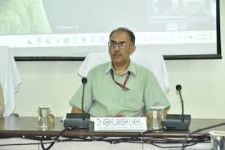
NEW DELHI, JAN 20, 2026: DR. Abhilaksh Likhi, Secretary, Department of Fisheries (DoF), Government of India, visited the Indian Council of Agricultural Research - Central Institute of Brackishwater Aquaculture (ICAR-CIBA) and its Muttukadu Experimental Station in Chennai, Tamil Nadu, yesterday.
As part of his field engagement, the Secretary interacted with shrimp farmers and entrepreneurs, who shared their success stories, best practices, and challenges encountered at various stages of production, processing, and marketing.
Dr. Likhi also visited the Penaeus indicus Genetic Improvement Programme site being implemented by ICAR-CIBA under the Pradhan Mantri Matsya Sampada Yojana (PMMSY). The programme aims to strengthen scientific shrimp breeding in the country through the development of genetically improved stocks of Indian white shrimp ( P. indicus ).
The Secretary interacted with ICAR-CIBA scientists and inspected several research facilities, including finfish, crustacean, ornamental fish, and crab units, as well as the feed mill. The visit provided firsthand exposure to the diverse research, development, and innovation activities being undertaken in the field of brackishwater aquaculture.
The visit of the Union Fisheries Secretary holds particular significance for the shrimp sector, as shrimp is India's leading seafood export commodity, accounting for nearly 70 percent of the country's total seafood exports to about 130 countries. Insights gained from direct interactions with farmers and entrepreneurs will help the Department in framing appropriate policy interventions and measures to ensure the sustained growth of the fisheries sector.
The Department of Fisheries, Government of India, has undertaken several initiatives to deepen shrimp markets. Despite the imposition of a 58 percent tariff by the United States, the sector has demonstrated resilience, registering a 21 percent growth in export value and a 12 percent increase in export quantity during April-October 2025.
ICAR-CIBA plays a significant role in shrimp feed development and is implementing two major PMMSY-funded projects aimed at advancing scientific aquaculture and improving resource use efficiency. The first project, “Development of Indigenous Shrimp Aquaculture: Genetic Improvement Program of Penaeus indicus,” with a total cost of Rs 25.04 crore, focuses on developing genetically improved indigenous shrimp lines. The second project, “New Age Shrimp System for Precise Use of Land, Water and Feed,” approved at a cost of Rs 2.21 crore, aims to promote climate-smart and resource-efficient shrimp farming models. Dr. Likhi reviewed the progress of both initiatives during the visit.
To further strengthen India's indigenous and sustainable shrimp feed ecosystem, two Memoranda of Understanding (MoUs) were signed on the sidelines of the visit in the presence of Dr. Abhilaksh Likhi.
The first MoU, between ICAR-CIBA and M/s Selle Hatchery Tech, Marakkanam , pertains to the commercialisation of India's first indigenous shrimp larval feed.
The second MoU, between ICAR-CIBA and M/s BRC Marine Products, Odisha , relates to the use of rice-based Rice Distillers' Dried Grains with Solubles (DDGS) as an affordable and sustainable protein source in shrimp feed for Penaeus vannamei.
ICAR-CIBA has also arranged a drone demonstration in the presence of the Secretary, Department of Fisheries, Government of India, where a live demonstration was conducted for feed spraying and transport. The application of drones in the fisheries sector is being explored, for which the Department of Fisheries has entrusted pilot projects to ICAR-CIFRI, Barrackpore, Kolkata, with a project cost of Rs 1.16 crore.
1. Promotion of indigenous shrimp feed production
Shrimp larval feeds currently imported at high costs have long been a constraint for hatcheries, and CIBA's focused research on larval feed formulations has led to the development of a viable indigenous alternative. The pilot scale feeds manufactured at CIBA have been successfully tested for about a year in more than fifty hatcheries across Tamil Nadu and Andhra Pradesh through incubatee partners, demonstrating their efficacy and market potential. Encouraged by these results, M/s. Selle Hatchery Tech will now establish a large scale production facility under the PMMSY scheme using CIBA's technology, marking a significant step toward self reliance in larval feed production.
2. Reduce dependence on costly imports via use of rice-based DDGS as protein source in shrimp feed
The second MoU, signed between ICAR CIBA and M/s. BRC Marine Products, Odisha, focuses on the use of rice based Rice Distillers' Dried Grains with Solubles (DDGS) as an affordable and sustainable protein source in shrimp feed for Penaeus vannamei. DDGS, a by product of rice based ethanol production, has been evaluated by ICAR CIBA as a potential substitute for costly conventional protein ingredients such as soybean meal. Laboratory studies have shown that DDGS can be included in shrimp diets at 7.5 to 10 percent without adverse effects on growth or health. In light of the promising research results, BRC Marine Products requested CIBA's technical support to undertake large scale field trials and technology transfer activities. The initiative is expected to reduce feed costs by 5 to 6 percent while promoting the use of locally available, cost effective ingredients instead of expensive imported protein sources.
During the visit, Dr. Likhi also chaired a hybrid meeting with officials from States and Union Territories, including Rajasthan, Haryana, and Uttar Pradesh. In his address, he appreciated ICAR-CIBA's contribution to national aquaculture development and emphasised the importance of coordinated efforts among research institutions, industry partners, and State governments to ensure timely and effective transfer of innovations to farmers. He highlighted the Government of India's focus on indigenous technology development, climate-smart aquaculture, and efficient resource utilisation.
During the session, Shri Sagar Mehra, Joint Secretary (Inland), DoF, Government of India; Dr. K.K. lal, Director, ICAR-CIBA; and Dr. J.K. Jena, Deputy Director General (Fisheries), ICAR, made detailed presentations. The formal proceedings began with welcome remarks delivered virtually by Dr. B.K. Behera, Chief Executive, National Fisheries Development Board (NFDB).